
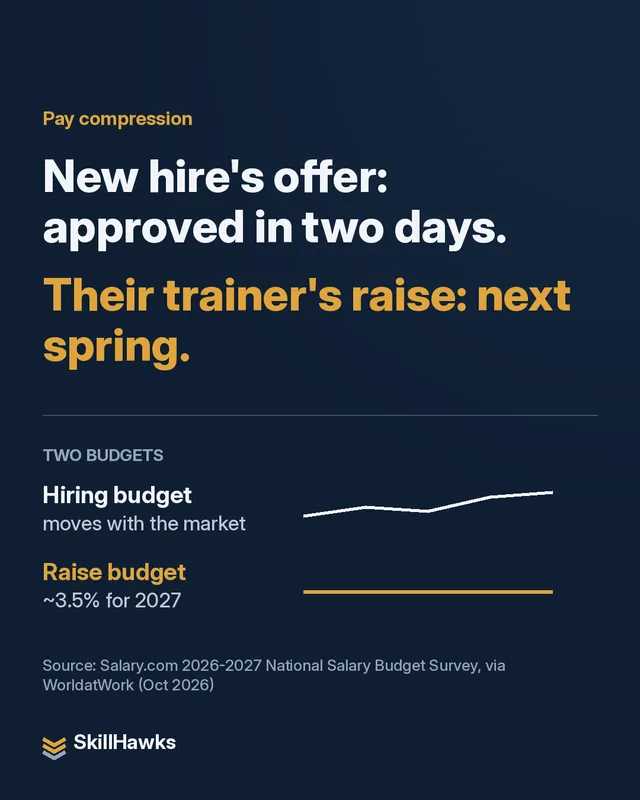
The new hire's offer was approved in two days.
The raise for the person who will train them is scheduled for next spring.
That gap has a name: pay compression. And it usually isn't anyone's bad decision. It's two budgets that never sit in the same meeting.
The hiring budget moves with the market, because it has to. If the role pays more out there, the offer goes up.
The raise budget doesn't move much. For 2027, U.S. employers are planning about 3.5% on average (3.4% in Canada), the same as this year, with less than 1% of that set aside for market and equity adjustments.
When the market moves faster than that, the difference lands on the people who stayed. In a UK survey published last month, about four in ten early-career employees who found out what a new starter earned learned it was the same as their pay or more. 84% of HR leaders said they worry about losing people over it. Only one in five planned targeted pay adjustments.
A few things that help before the next offer goes out:
- Check what the people already in the role earn before you approve the offer.
- Keep part of the raise budget for market and equity fixes, not only merit.
- Review your salary ranges at least once a year, and every time you post one publicly.
- If you can't close a gap right away, tell the person what you're doing and by when.
- Notice who carries extra weight, like training new hires, and let pay reflect it.
Have you been the person who trained a better-paid new hire, or the manager who had to explain it? What happened next?