
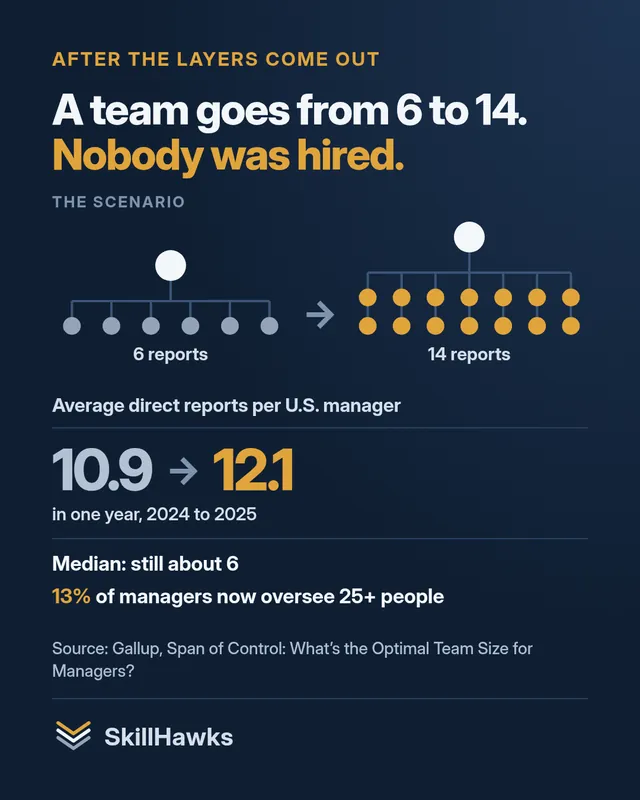
A manager's team goes from 6 people to 14. Nobody was hired.
That's what flattening often looks like from the inside. A layer of managers comes out, and the people who remain pick up their reports.
Gallup's data shows the average U.S. manager now has 12.1 direct reports, up from 10.9 a year earlier. The median is still about six, so most managers lead small teams. But 13% now oversee 25 or more people.
A bigger team can work. It rarely works by default.
Before adding reports to anyone, it's worth asking:
- What will this manager stop doing to make room?
- Is the team's work routine, or does it need judgment and coaching every week?
- Who now owns the onboarding and development the removed layer used to handle?
- Will one-on-ones still happen, or will they quietly disappear?
- How will you know in three months whether it's working?
Have you seen a team double overnight, as the manager or as one of the reports? What made it workable, or what would have?